Drawing approval is usually the result of a review process, not a single button. Xenmark helps teams organise the comments, responses, statuses and revised PDFs that lead up to the decision.
It does not replace any formal approval, signature, certification, contractual acceptance, classification, flag or regulatory process that applies.
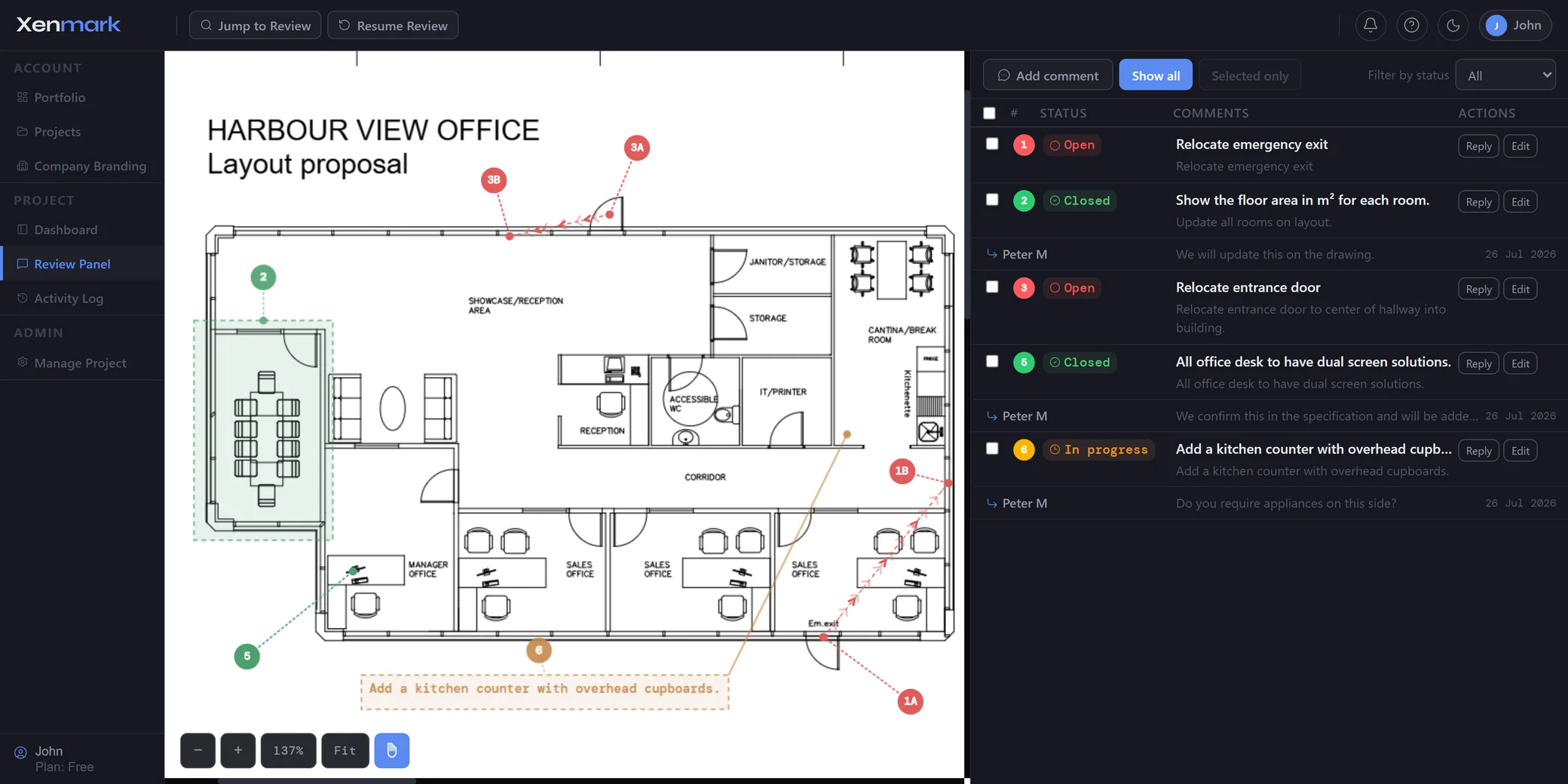
What does Xenmark mean by drawing approval?
It means the review before approval.
A team may need to collect comments, ask questions, request changes, review responses and check a revised drawing before an authorised person or external system records the formal decision.
Xenmark can organise that collaborative work around the PDF.
The actual approval still belongs to whoever has authority under the contract, organisation, regulation or technical process.
How do you prepare a drawing for an approval decision?
Use one structured review rather than assembling the evidence from several places.
A practical sequence is:
- upload the issued PDF;
- invite the required reviewers;
- raise numbered comments at the relevant drawing locations;
- discuss requested changes in the comment threads;
- track Open, In progress and Closed review items;
- upload the revised PDF if changes are required;
- check the new revision against earlier feedback;
- export the review record if the next process needs it;
- complete the formal approval step in the required system.
Xenmark supports steps 1–8. Step 9 is outside the product when a separate formal process applies.
Why is comment status useful before acceptance?
Because the team can see whether review items still require attention before somebody makes the final decision.
The status is a coordination aid, not an approval code. A Closed comment does not mean a drawing is approved for construction, certified, class-approved or accepted under a contract.
Keeping that distinction explicit prevents the collaborative review status from being mistaken for a formal document status.
What if the approval review involves external organisations?
Invite the client, consultant, contractor, supplier, designer or other reviewer into the same project where appropriate.
Their comments and replies stay with the drawing location rather than arriving as another separate markup package.
This is useful when the approval decision depends on evidence from several organisations but none of them should have access to the underlying authoring environment.
How should revised drawings be checked before approval?
Use the earlier review history as context, but do not assume a new revision automatically resolved the old comments.
Earlier comments stay tied to the revision where they were raised. The reviewer checks the next PDF and decides whether the requested change has been addressed.
That human judgement is the bridge between Revision Review and Drawing Approval.
See Revision Review.
What review record can be provided to the approval process?
Xenmark can export a Comment Plan PDF and matching Excel comment register. Those files can provide a portable record of the collaborative review when a customer, project team or document-control process needs a separate deliverable.
They are review records, not approval certificates.
If the organisation requires a signed approval, controlled transmittal, authority portal or regulated record, continue with that process separately.
Can Xenmark be used for class, flag or statutory approval?
Xenmark can help organise an internal or collaborative review before or around a formal process, but it does not perform the class, flag, statutory or regulatory approval itself.
Uploading a drawing to Xenmark does not make it approved or compliant.
The same boundary applies in every industry.
When does this fit?
It fits when:
- several reviewers need to comment before a drawing can move forward;
- outstanding items need to be visible before acceptance;
- a revised drawing needs to be checked against earlier feedback;
- external reviewers need to participate;
- the project needs a portable review record;
- the formal approval occurs in another system afterwards.
Who should make the final approval or acceptance decision?
The person or organisation authorised by the project, contract or applicable formal process. Xenmark does not assign that authority.
Depending on the workflow, the decision may belong to a client, owner, consultant, engineering lead, document controller, contractor, classification society, authority or another designated party. Having every Xenmark comment Closed does not bypass that governance.
The product’s job is to make the collaborative review leading up to that decision easier to understand.
What if a project uses approval codes or document statuses?
Keep those formal codes in the system that controls them unless Xenmark explicitly supports that contractual workflow.
A Xenmark comment status answers whether an individual review point is Open, In progress or Closed. A project document status may answer a completely different question: issued for information, accepted with comments, approved for construction, rejected, superseded or another controlled state.
The two are different things. Use Xenmark to structure the review evidence, then record the official document decision where the project requires it.