Xenmark is designed to coordinate an active drawing review, not to become the permanent home for every project record. When the review is finished, the team can export the principal deliverables and download a fuller archive bundle to keep in its own document system.
That creates a clear end to the review without trapping the record behind an ongoing subscription.
What should you keep after a drawing review is complete?
Keep the files that explain both where the comments were and what the review said.
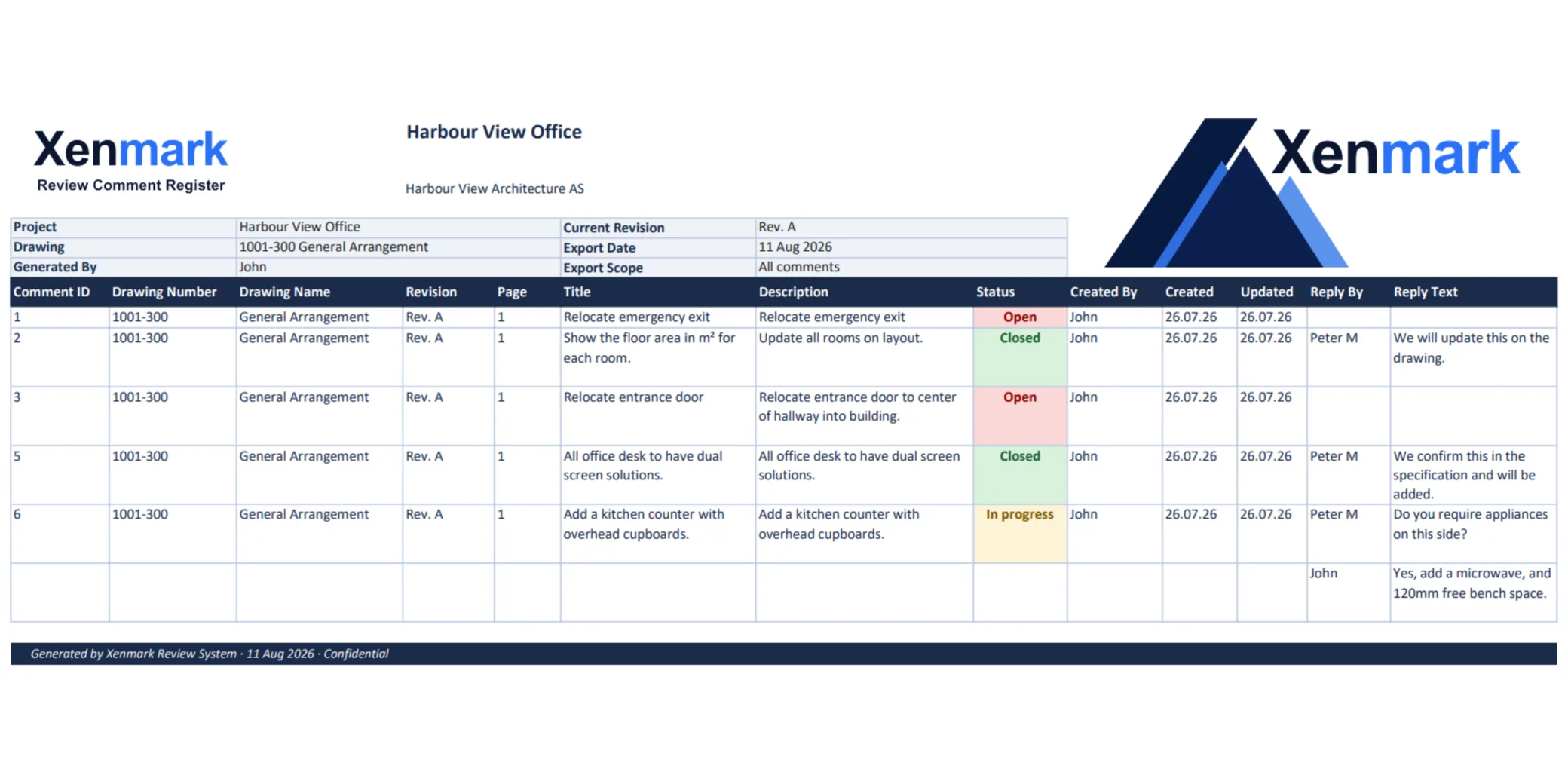
The core deliverables are the Comment Plan PDF and matching Excel register. The full project archive adds the broader review package, including revision deliverables, comment attachments, activity history and supporting project information such as the README included in the bundle.
The organisation can then store that material in its normal DMS, project folder or other record system.
What is in the project archive bundle?
The current Xenmark closeout workflow produces a downloadable archive containing the review outputs across drawing revisions, the comment attachments, the activity log and a README.
The archive is designed to let you leave the active review workspace with a portable record.
What does the activity log add to the handover?
The activity log provides a timeline of review actions with attribution and timestamps. It can help a team understand when revisions were uploaded, comments or replies were created, statuses changed or other review actions occurred.
It is useful context when somebody later needs to understand the sequence of the review.
It is not a certified legal archive or formal audit system.
Is Xenmark supposed to be the permanent document archive?
No. Xenmark is a focused review system.
The durable project record should live in whatever document-management, storage or asset-information system the organisation already uses. The handover workflow is deliberately built around exporting the review and storing it on the user’s side.
That boundary is deliberate.
How is handover different from the Drawing Comment Register page?
Drawing Comment Register focuses on the two principal review outputs: the marked-up Comment Plan PDF and matching Excel register.
Drawing Review Handover focuses on the end of the project review: collecting the broader record, including attachments and activity history, and moving it into the user’s own long-term storage.
Can the archive replace contractual or regulated records?
No. If the project requires certified document control, regulated archiving, signed approvals or other formal records, continue using the required system.
The Xenmark archive is a portable record of the collaborative drawing review. It does not convert the project into a legally or regulatorily certified archive.
The Acceptable Use policy sets out what Xenmark is not intended for.
When should a project be closed?
Close the review when the active collaborative work is complete and the team is ready to retain the outputs on its own side.
Before closing, confirm that the required PDFs, Excel registers, attachments or other review deliverables have been downloaded according to the organisation’s own process.
How long a closed project stays available depends on your plan; Plans and limits gives the current retention periods.
How does this reduce vendor lock-in?
The important review outputs are portable files that the user can keep independently: PDFs, Excel workbooks and the downloaded project archive.
The goal is simple: Xenmark handles the active review, then the record returns to the user’s own document environment.
What should the handover process look like in practice?
Before closing the review, confirm that the latest required deliverables have been exported and that the organisation knows where the durable record will live.
A practical closeout is:
- finish the active comment and revision review;
- export the required Comment Plan PDFs and Excel registers;
- download the project archive bundle;
- place the retained files in the organisation’s normal DMS, project folder or asset-information environment;
- record any formal document status or approval in the system responsible for it.
This keeps Xenmark’s job clear from beginning to end.
Why is local ownership of the review record useful?
Projects outlive subscriptions, team memberships and individual software choices. Portable PDF and Excel outputs are readable in ordinary tools, and a downloaded archive gives the organisation a copy of the broader review history on its own storage.
That is not a promise of indefinite archival compliance. Xenmark is designed to hand the review record back, not to certify how the receiving organisation stores it.