Small differences between a vessel and its drawings can accumulate: a replacement unit is shown under an older model, a valve tag changed, or a route was adjusted during earlier work. If each note is sent to an engineer without a drawing reference or supporting evidence, scoping becomes a series of clarifying messages. If every note is merged into “update all drawings,” the request becomes too vague to assess.
The useful middle ground is one observation per point, grouped into a proposed work package. The owner describes what is known and why the issue matters. The engineering company confirms what it needs to investigate, which drawings are affected and what technical work is actually required.
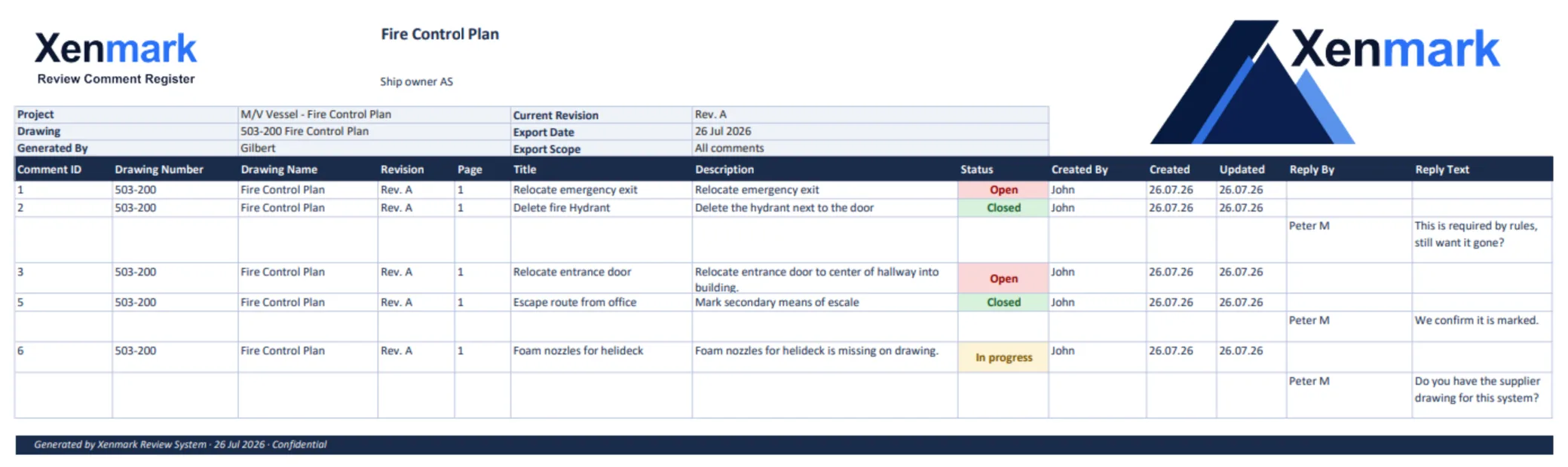
Build an issue list before choosing a package
For each observation, record vessel, drawing number/title/revision, drawing location, onboard location, observed condition, evidence, date and contact person. Keep a separate field for the desired outcome or question. Mark uncertainty plainly: “tag to be confirmed” is better than guessing a tag that later becomes part of a design instruction.
Illustrative example: On one vessel, an owner logs three issues. A machinery arrangement shows the old pump model; a piping drawing has a valve tag that does not match a field photograph; a deck arrangement appears to show a removed locker. The pump record has a nameplate photograph and can be assessed. The valve needs onboard identification. The locker may belong to a different refit work package. These are illustrative entries, not customer data.
Group related points, but keep their identities
Possible grouping methods include drawing number, technical discipline, vessel area and planned work package. The best grouping depends on who will evaluate the changes. A machinery and piping pair may share an equipment interface. Two unrelated discrepancies on the same drawing may still need different technical owners. Avoid hiding separate questions inside a single comment just to reduce row count.
Related small updates can reduce repeated scoping and administration, but that is a possibility rather than a guaranteed cost or schedule outcome. Some observations will need a survey or a formal process that makes them unsuitable to bundle with routine drawing cleanup.
Send an engineer-readable scope request
A concise request can include the issue list, PDFs for the latest known drawing revisions, photographs and work records where available, why the owner wants the records updated, planned vessel availability, any known dependencies, and a named person for follow-up. Ask the engineering company to identify missing information, technical scope, affected drawings, assumptions and the revision/issue route.
The owner may know the actual vessel condition, but the responsible technical party must evaluate what it means. Do not instruct it to copy field markup directly into the CAD/master drawing without design review.
Review the returned package
When revised drawings are issued, check each against the corresponding observation. Confirm drawing numbers and new revision IDs, record the human conclusion for each earlier point, and look for newly introduced questions. Keep observations that were intentionally deferred visible for the next package; do not mark them complete merely because one drawing was revised.
Xenmark can help tie each observation to an issued PDF and retain the replies and review record. For an individual issue, see Vessel Drawing Updates; for the two-sided information handoff, see Owner–Engineer Drawing Review During Vessel Modifications.
A sample grouping worksheet
| Point | Issued drawing / area | What is known | What is missing | Proposed package |
|---|---|---|---|---|
| U-01 | M-104 Rev A / pump | Replacement model and photograph available | Engineer to confirm affected connections | Machinery update |
| U-02 | P-302 Rev A / valve | Field photo suggests different tag | Onboard tag verification | Hold pending evidence |
| U-03 | GA-201 Rev C / deck locker | Locker appears removed | Confirm whether this was part of prior refit | Separate deck package |
The entries are illustrative and intentionally contain open questions. The grouping column is an owner-side proposal, not a technical work order. The engineering company may regroup the points after assessing interfaces.
Which issues should stay out of the first package?
An observation with no reliable drawing reference, no way to identify the equipment, or a possible safety/approval implication may need targeted investigation before it can be scoped as routine drawing cleanup. Record it, assign someone to obtain evidence and avoid letting it disappear. “Hold pending evidence” is a planning note here, not a Xenmark product status.
Likewise, do not bundle unrelated changes merely because the vessel will be in a yard at the same time. Shared timing can be useful, but technical dependencies and responsibility matter more. A change that affects a fire plan or a class-controlled drawing may follow a different review route from a minor arrangement clarification.
How should the owner describe priorities?
Describe operational context and deadlines without claiming a technical classification. For example, say that a drawing is needed for an upcoming engineering package, that a crew member cannot identify a valve from the current plan, or that a supplier needs a confirmed equipment interface. The responsible technical and vessel-management parties decide how urgent the issue is and what action is appropriate.
The scoping worksheet is valuable because it makes the boundary visible: the owner contributes observations, evidence and business context; the engineering company confirms technical scope and prepares revisions; the project decides any formal channel. A clear list can reduce repeated clarification, but no guide can promise a particular saving for every vessel.
Before sending the package, ask someone unfamiliar with the observations to locate each point using only the drawing reference and evidence provided. If they cannot, the engineering company is unlikely to do so quickly either. Check that photographs are dated, that drawing revisions are stated and that every uncertain field is marked as uncertain. The owner can then send a concise request for the engineer to assess the scope instead of a bundle of unexplained marked files.
When the engineering company proposes a plan, compare its drawing list back to the original issue list. If one observation is omitted or deferred, note why and who will pick it up later. The package is useful precisely because it preserves the individual points through the grouping decision.
A simple follow-up date for unresolved evidence can help, but it should be owned by the project rather than presented as a built-in approval deadline. Some points may be resolved by a photograph, others by a survey or a separate modification project. The list remains useful when it shows that difference instead of forcing all issues into the same update schedule.
Related pages
Return to Maritime & Shipbuilding for the Industry hub. Vessel Drawing Updates covers each issue after it is scoped; Owner–Engineer Drawing Review During Vessel Modifications covers the handoff. Ship Owners, Superintendents / Technical Managers and Marine Engineering Companies describe the people who collect and assess the package.