The vessel and the design office often hold different parts of the same answer. Crew and owner representatives know what is installed and how it is used. The engineering company knows how a proposed change must be evaluated and incorporated into a controlled drawing. A productive review makes those two forms of knowledge meet at a precise point on an issued PDF.
The owner-side task is to provide evidence and context, not to certify a design. The engineer's task is to interpret that information, ask for what is missing, and author the technical revision within its agreed scope. Both sides need to review the drawing returned from that work.
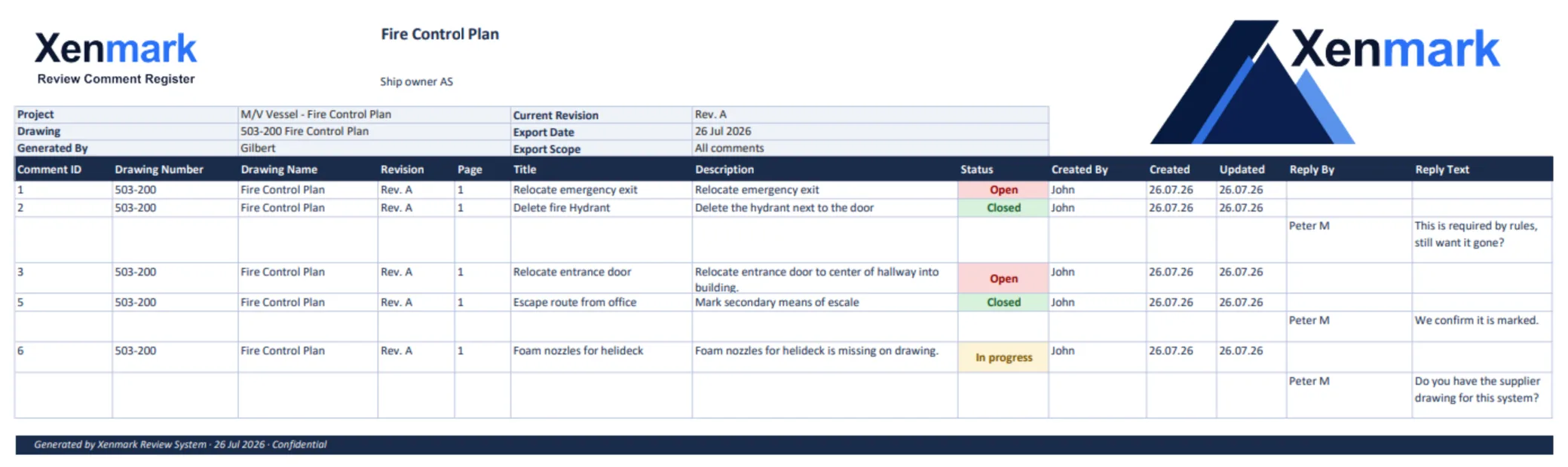
What does the vessel side know?
It may know that equipment was replaced in an earlier repair, that a route now passes behind a different bulkhead, or that access shown on a drawing is blocked in practice. Operational history can explain why a drawing discrepancy matters. The owner or superintendent can often supply photographs, equipment identification, work records and a precise onboard location.
What it may not know is whether the observed condition is technically acceptable, whether a related drawing must also change, or what formal review is required. Those uncertainties should be visible in the request rather than hidden behind a confident redline.
What does the engineering side need?
A useful handoff packet names the vessel or project, drawing number and issue, deck/space/item reference, what the drawing shows, what was observed, why the matter is being raised, supporting evidence, and the person who can answer follow-up questions. If a dimension is supplied, say whether it is measured, estimated or copied from another controlled source.
The engineer may ask whether the photographed equipment is the same item shown on the drawing, whether a change was temporary, or whether another discipline has an interface. Such questions are progress, not a failure of the review process: they prevent an unsupported assumption from becoming a technical drawing.
Illustrative exchange: “Drawing M-104 Rev A shows pump P-2 forward of the foundation. Current vessel photographs show a replacement unit aft of that position. Please confirm whether the pump arrangement drawing needs revision; the valve tag in the same area is still being checked.” The engineer responds: “Please provide the pump nameplate and a photograph of the suction connection before we set the revision scope.” The reviewer attaches the evidence to the relevant comment rather than sending a disconnected email. This exchange is illustrative, not a customer record.
Who chooses the technical solution?
The responsible design or engineering party interprets the evidence, performs its own checks, and authors any revised technical drawing in its normal system. A PDF markup can help point to a location and discuss a possible outcome. It does not replace technical design, verification, class/flag decisions or controlled document issue.
During a modification project, the chosen solution can touch the yard’s installation plan, a supplier interface, access, supports or a related piping/electrical drawing. Each project decides who is authorized to resolve those questions. The review record should show what was asked and answered without pretending Xenmark itself made the engineering decision.
How do both sides check the returned revision?
Confirm the returned drawing number and revision. Compare the new issue with the original request and the engineering reply. Ask whether the observed condition was represented correctly, whether the intended outcome was addressed, and whether nearby interfaces introduced new questions. Earlier comments stay on their original revision; the reviewers record their judgement about the new one.
Retain the old and new issues, source evidence, replies and review outcome in the owner’s controlled document process. For an individual update, see Vessel Drawing Updates. For the wider project interfaces, see Conversion, Refit & Retrofit Drawing Review.
A practical handoff packet
The owner-side reviewer can collect the following in one place without claiming to have completed the design:
| Item | What to provide |
|---|---|
| Reference | Vessel/project ID; drawing number, title, revision and source |
| Observation | Exact onboard condition, location and date |
| Difference | What the issued drawing shows versus what was observed |
| Evidence | Photographs, equipment identification, work records or measured dimensions, with provenance |
| Uncertainty | What has not been confirmed and who may verify it |
| Requested response | Clarification, technical assessment, site survey or revised drawing |
| Return check | Who will review the newly issued PDF and against which earlier points |
This packet gives the engineer a structured question rather than a predetermined solution. It can also reveal that the wrong drawing was selected, that several drawings need coordination, or that a field observation cannot yet be trusted.
How should clarifications be handled when they cross disciplines?
Suppose a machinery arrangement shows a replacement unit in one location, while a piping drawing shows connections that would only fit the old location. Do not ask each discipline to “fix its drawing” independently without a coordinated design decision. Reference both issued drawings, state the conflict and name the interface question. The appointed technical leads can decide which documents need revision and in what order.
An owner may need to answer a practical question, such as where the equipment can be accessed during operation. A supplier may need to supply installation data. The engineer remains responsible for technical integration within its scope. Keeping each contribution attached to the right drawing point makes the handoff auditable without making the review tool the design authority.
What if the proposed change is not accepted?
Not every request becomes a revised drawing. The engineering party may conclude that the observed item was misidentified, that the existing drawing already reflects the controlled condition, or that the requested outcome is unsuitable without further work. Preserve the explanation and evidence. A useful review record shows why a point was not progressed, rather than merely deleting it. If the vessel-side observation remains unresolved, assign the next investigation clearly.
What should the owner confirm before accepting the return?
Check that the revised PDF is an issued file from the responsible party, not merely a screenshot of an edit. Confirm its drawing number and revision, then compare it with the original onboard evidence. If the engineer’s answer relies on a site assumption that has not been checked, keep that qualification in the review outcome. Acceptance of the review response should not be confused with technical certification or formal approval.
This two-sided check is the real value of the guide. The engineer does not need the owner to design the vessel, but it does need reliable information about the vessel. The owner does not need to operate the authoring software, but it does need to see whether its observation was understood and represented in the returned drawing.
If the return is incomplete, the next message should identify the exact unresolved point and the evidence needed. “Rev B still shows the old valve tag at the marked location; the nameplate photograph is attached” moves the work forward. “Drawing still wrong” restarts the conversation without telling the engineer what to investigate.
Related pages
Return to Maritime & Shipbuilding for the Industry hub. Continue to Vessel Drawing Updates for one drawing or Conversion, Refit & Retrofit Drawing Review for project interfaces. Ship Owners, Superintendents / Technical Managers and Marine Engineering Companies cover the people on either side of the handoff.